






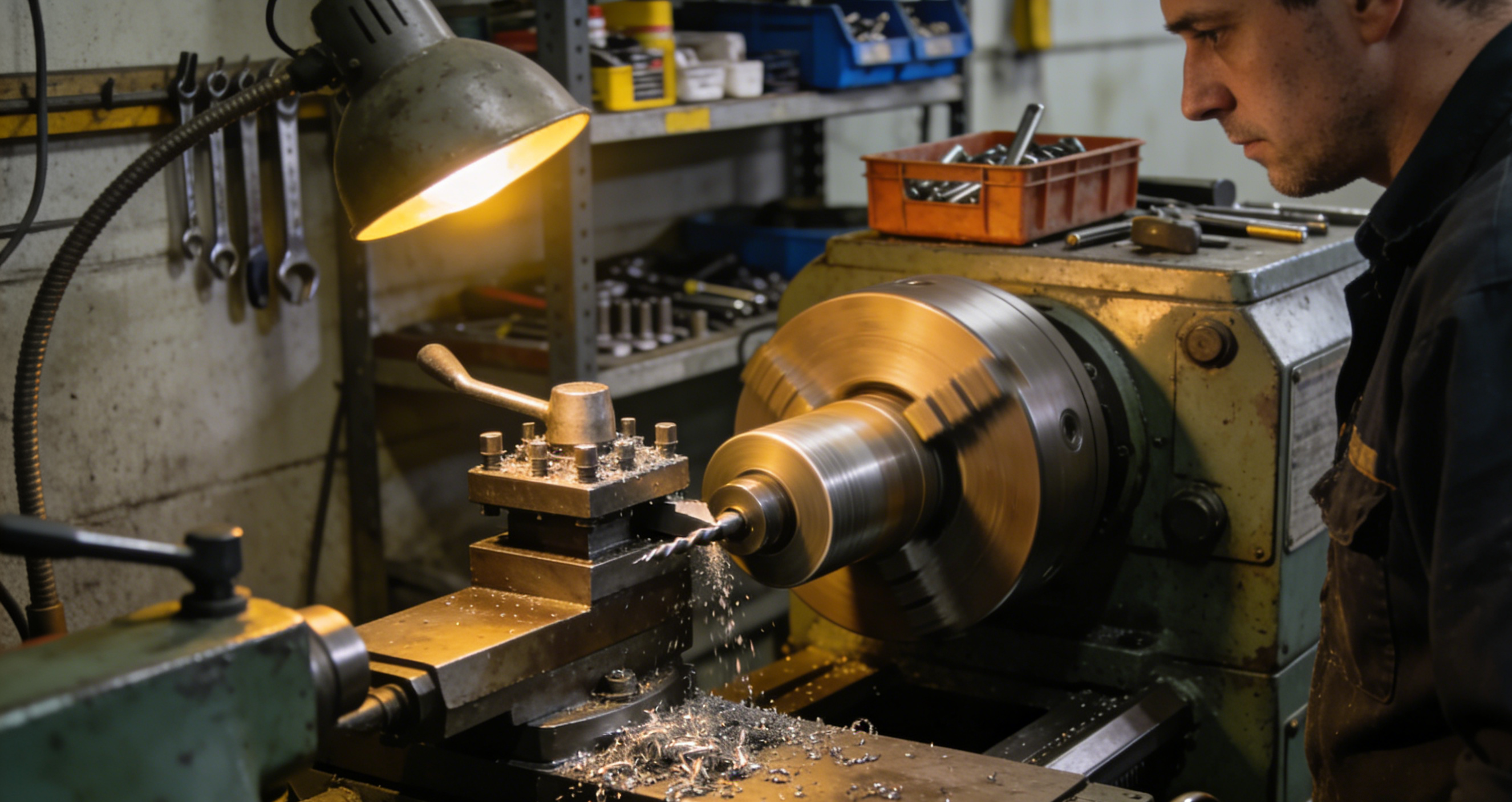
Q1: Our stepped shafts keep showing visible mismatch lines between diameters. Why does this keep happening even with “precision” suppliers?
A: Most shops still use manual tool offsets and basic toolposts that can’t hold perfect repeatability across multiple diameters in one setup.
We run live-tool CNC lathes with automatic tool compensation and sub-spindle pickup. The part never leaves the chuck until every step is perfect. One automation customer went from 11% reject rate on 3,100 stepped shafts to under 1% after switching — saved them $9,400 in one batch and stopped the endless “it’s within tolerance” arguments.
Q2: Thin-walled tubes distort during turning, forcing us to add extra material or secondary straightening. Is there a better way?
A: The distortion comes from uneven cutting pressure and heat on thin sections.
We use vibration-damped boring bars, extremely light finishing passes, and through-tool coolant to keep the wall stable. A medical device buyer was adding 0.6 mm extra wall thickness just to survive turning. After working with us, they went back to the original drawing on 4,200 tubes — zero distortion, 18% lighter parts, and $7,200 saved in material.
Q3: Thread quality is hit-or-miss — some batches leak, some don’t. How do you guarantee consistent threads every time?
A: Inconsistent threads usually come from unstable cutting conditions or worn tooling on standard lathes.
We use rigid threading bars, constant surface speed, and in-process thread gauging on every part. A valve manufacturer had 8% leak rejects on 5,300 threaded bodies. After we took over, the leak rate dropped to 0.3% — they actually reduced their inspection staff because the parts were so consistent.
Q4: Large-diameter parts take forever on the lathe, and quotes are painful. Can modern lathes really move faster without losing accuracy?
A: Old lathes with low horsepower and slow spindles are the bottleneck on big diameters.
Our heavy-duty CNC lathes have 45 kW spindles and rigid beds that maintain accuracy even at high RPM. A heavy equipment supplier cut cycle time on Ø420 mm flanges from 28 minutes to 14 minutes on 2,800 pieces — quotes dropped 21%, and they finally hit their aggressive delivery targets.
Q5: When we scale from 100 prototypes to full production, diameter and roundness start drifting. How do you keep it tight at volume?
A: Prototypes are often run on different machines or with different operators, so scaling exposes the weak spots.
We use the same high-rigidity lathes with automatic in-process probing and tool wear compensation for every single part — from first article to the 6,000th. An automotive Tier-1 supplier scaled 6,700 bushings with us: roundness stayed within 0.003 mm the entire run, yield stayed at 99.1%, and they didn’t need to add any extra quality gates.
Tired of turned parts that look good on paper but fail in real life?
Let’s change that.
Visit www.simituo.com for honest capabilities and fast quotes.