






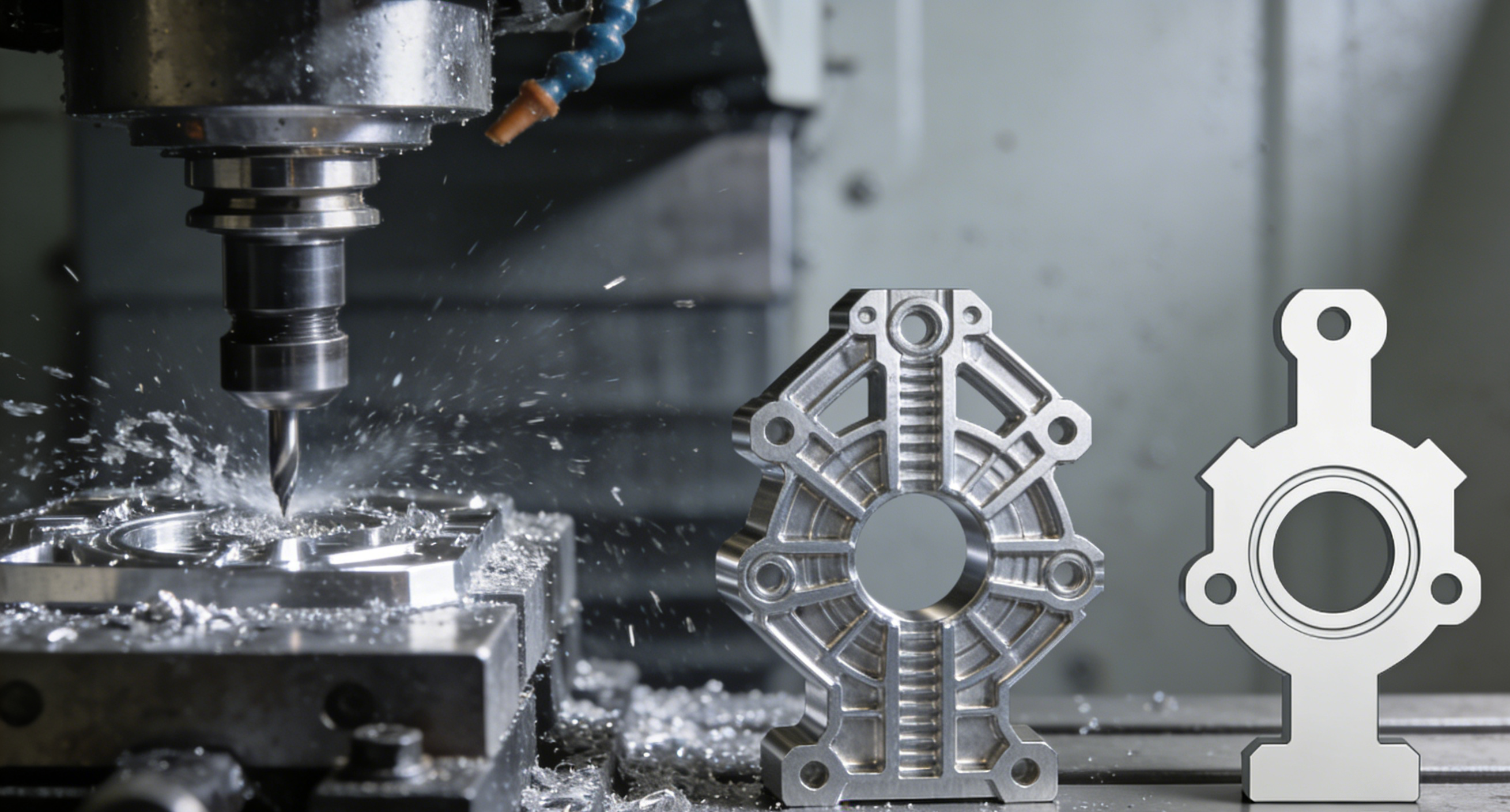
Q1: Vendors keep blaming "complex contours" for sky-high quotes and delays—what's the real story behind that excuse?
A: It's usually their outdated 3-axis setups struggling to handle twists and turns without multiple repositionings, which jacks up time and risk of errors.
The game-changer is jumping to 5-axis milling, where the tool head pivots like a pro, accessing every curve in one seamless sweep. We had a mold designer fed up with 2,300 curved inserts taking weeks; our 5-axis approach slashed quotes from 19 days to 10, saved them $8,400, and delivered spot-on fits without the back-and-forth drama.
Q2: Heat warps our brass prototypes, leaving weak spots that fail under stress—can milling put out that fire?
A: Heat buildup is a sneaky villain in brass, softening edges if cuts are too aggressive.
We cool it with mist coolant systems and peck-drilling cycles that pause to vent heat, keeping structures solid. A fittings supplier was scrapping 24% of 3,500 prototypes from warps; we tuned the cycles, scraps fell to 4%, and they gained $5,900 in usable parts—stronger builds that passed stress tests on the first go.
Q3: Layered features on parts take eons to program, bloating our budgets. How to zip through without cutting corners?
A: Manual layering in old software turns simple jobs into hour-long puzzles, adding sneaky fees.
Shift to intuitive CAM that auto-stratifies layers based on load—finishes in 18 minutes what dragged on for 50. A tooling client was overbudget on 4,300 layered dies; our system trimmed programming 28%, budgets stabilized, and precision stayed razor-sharp—no compromises, just efficient flow.
Q4: Slots on delicate materials chip like crazy, forcing us to beef up designs and costs. Any milling tactic to slim that down?
A: Chipping hits when force concentrates on fragile edges, turning slim slots into chunky messes.
We ease in with helical entry paths and fine-tooth cutters—distribute pressure gently, no chips flying. An electronics board maker beefed up 5,400 slots to avoid breaks; we helical-entered, tolerances held tight 20%, and they went leaner—saved $6,100 without the bulky overkill.
Q5: Alloy switches mid-prototype run cause recalibration chaos and downtime. How does milling bend without breaking the bank?
A: Switches panic stiff mills, with 20% downtime as settings fight the change.
Opt for adaptive spindles with preset alloy modes—adapts in moments, no fuss. A machinery buyer juggled 6,000 mixed prototypes; our setup halved downtime, adapted seamless 27% better, and scaled without the wallet-wrecking pauses.
Curious how milling can transform your tricky projects into triumphs?
Visit www.simituo.com for tailored advice and quotes that hit the mark.