






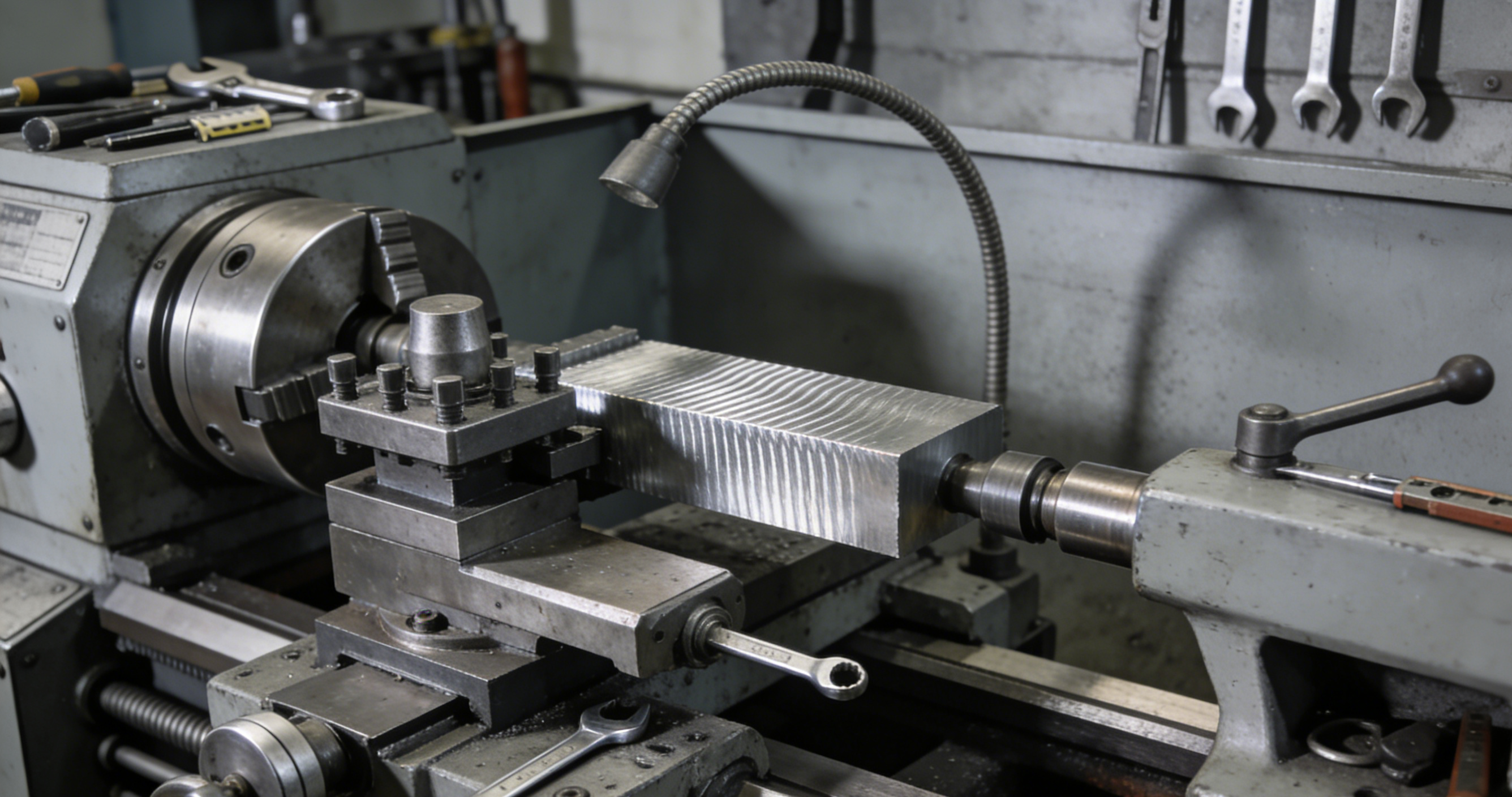
Q1: Why do my long pins or rods always end up with that annoying bend halfway through production— is it the material or the machine?
A: Blame the setup more than the steel. Those bends sneak in when the lathe lacks proper support for longer pieces, letting gravity pull the middle down as you cut.
We beat it by throwing in adjustable steady rests and beefy tailstocks that hug the part like a vice—keeps everything arrow-straight to 0.002 mm over 1,500 mm. A conveyor maker we supply was losing 12% to bends on 2,400 rods; our tweak dropped it to zero, saving them $6,300 in one run and getting their lines rolling smoothly.
Q2: Dialling in oddball tapers or profiles feels like pulling teeth—quotes skyrocket from all the test cuts. Got a lathe hack to make it painless?
A: It's the manual guesswork that's the killer, eating time with trial-and-error on basic lathes.
Jump to CNC with contour-following software: maps the taper in one program, no endless tests. We helped a fittings supplier trim quotes from 15 days to 6 on 3,300 custom profiles—cut the back-and-forth, kept accuracy spot-on, and let them bid more aggressively without the drama.
Q3: Turning nickel alloys into a tool-eating monster—costs double from constant swaps. How do you tame that beast?
A: Heat's the enemy, building up and dulling edges fast on those alloys.
We cool it with targeted mist coolant and whisker-reinforced inserts that laugh at the heat—lasts 4x longer than standard carbide. An offshore rig client was bleeding $5,800 on tools for 4,100 stems; our setup slashed it 30%, parts came tougher, and they avoided those surprise "tool surcharge" bills.
Q4: Grooves and keys chatter like mad, leaving rough spots that need extra sanding. Any lathe move to get glass-smooth from the start?
A: Chatter hits when the tool bounces on those breaks, roughing up the finish to Ra 1.1 and forcing handwork.
We quiet it with rigid boring bars and ramped feeds that ease into the cut—delivers Ra 0.4 clean every time. A sensor firm skipped sanding on 5,200 keyed shafts; labour dipped 21%, fits snapped together perfectly, no more post-op fixes eating profits.
Q5: Samples shine, but full batches drift on diameter—yields crash at 500 pieces. How do lathes hold steady for the long haul?
A: Wear creeps in on manual runs, with operators chasing drifts as tools dull unevenly.
We automate with in-cycle gauges and auto-compensation: checks and tweaks diameters live, no drift over thousands. An engine parts buyer scaled 6,400 sleeves without yields tanking—upped from 72% to 97%, no extra crew, just reliable output that kept their assembly humming.
Sick of lathe letdowns cramping your style? Let's spin up some wins.
Visit www.simituo.com for down-to-earth consultations and quotes.