






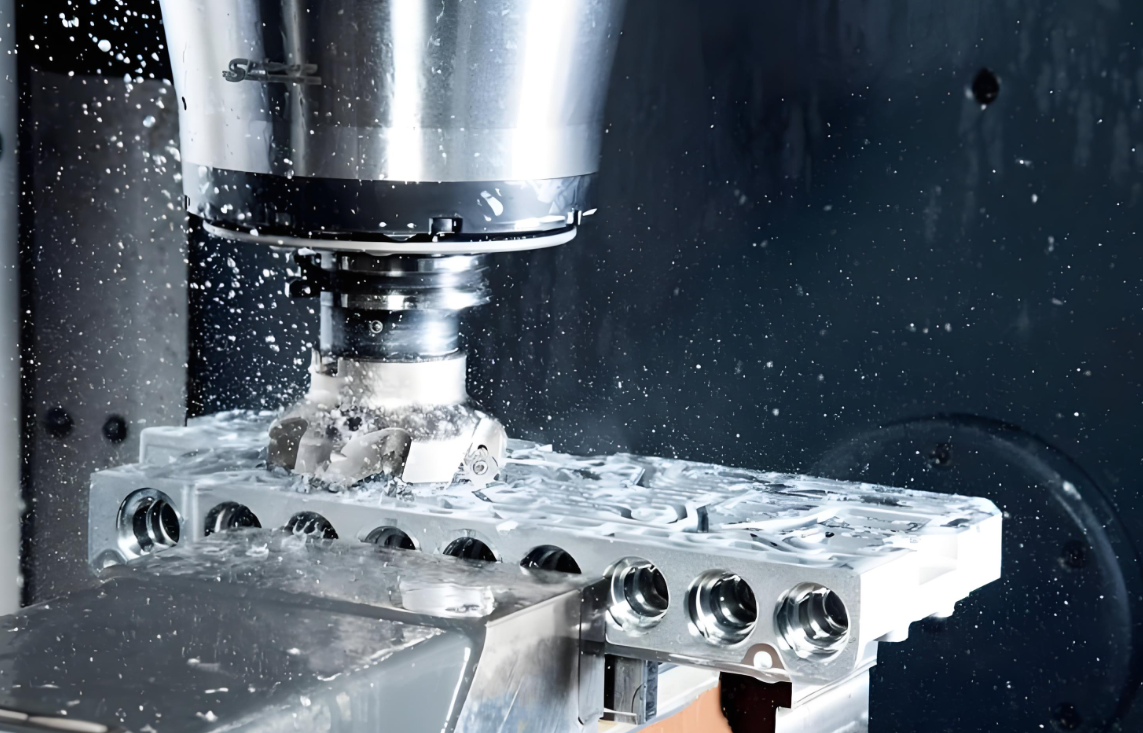
In the heavy machinery and equipment manufacturing sector, roughing operations for large casting and forging blanks represent the critical factor determining overall production efficiency and costs. Gantry CNC machining technology, with its robust physical architecture and advanced control capabilities, provides the definitive solution for this initial yet crucial stage. Understanding the underlying machining logic enables efficient and reliable material removal while safeguarding subsequent precision requirements. The following Q&A explores these core strategies.
Question: Why is the gantry structure itself the preferred foundation for heavy-duty cutting?
Answer: The gantry frame provides bridge-like structural stability. This design directs the primary force flow generated by cutting into the rigid machine bed rather than the spindle head itself, significantly suppressing vibration and deformation. When performing aggressive stock removal, this inherent structural rigidity is fundamental to maintaining stable tool engagement, protecting long-term machine accuracy, and creating the necessary conditions for deploying high-power configurations.
Question: What does a high-power spindle mean in actual machining operations?
Answer: It translates directly into higher metal removal rates. Gantry CNC spindles with ample power reserves allow engineers to adopt aggressive cutting parameters. For instance, they can increase cutting depths or feed speeds to remove large material volumes in minimal time. This capability is crucial for reducing per-unit machining time for large workpieces and serves as a core driver for overall production line efficiency.
Question: How do high-torque characteristics influence tool and process selection?
Answer: High torque endows the machine with powerful low-speed cutting capabilities. When roughing large blanks, particularly when encountering hardened skins or discontinuous surfaces, relatively low RPM engagement is often necessary. Ample torque ensures tools maintain continuous cutting without stalling when encountering resistance. This makes it possible to deploy large-diameter, multi-tooth face mills for efficient peeling operations that significantly boost roughing productivity.
Question: What irreplaceable role do robust tool holders play in this scenario?
Answer: They ensure effective power transmission from spindle to cutting tip. Under harsh heavy-duty conditions, minute runout in standard tool holders becomes amplified, causing vibration, accelerated tool wear, or catastrophic failure. Robust tool holders utilize specialized clamping mechanisms to provide exceptional gripping rigidity and repeatability. They effectively provide a solid operational platform for the cutting tool and are the critical component for harnessing the full potential of high power and high torque.
Question: What are the strategic priorities for specialized tools when facing different blanks?
Answer: The strategy centers on combating specific wear mechanisms. When machining castings, tools must withstand sand inclusions and hard spots, requiring emphasis on abrasion resistance. When processing forgings, they must address chip adhesion and high temperatures from high-toughness materials. Therefore, tool substrate materials, coating technologies, and chip breaker geometries must be selectively matched. The objective is maintaining adequate tool life at maximum cutting depths and feeds, thereby minimizing tool change interruptions.
Question: How does synergy across the entire process system ultimately ensure precision results?
Answer: Efficient roughing paves the way for precision finishing. The true value of gantry CNC systems lies in their ability to rapidly stabilize after aggressive cutting, thanks to inherent rigidity. By strategically removing the majority of internal stresses and stock during roughing, workpiece stresses partially relieve and geometric contours take preliminary shape. This creates a more stable, predictable condition for subsequent precision finishing operations, holistically balancing efficiency with final dimensional accuracy.
In summary, gantry CNC capabilities in heavy-duty cutting stem not from individual component strength, but from systematic integration of structure, power, torque, clamping, and cutting tools. This integration converges on one clear objective: preparing large workpieces for precision manufacturing in the shortest possible time through the most reliable means.
For decision-makers seeking reliable supply chains and manufacturing efficiency, deeply understanding this process provides an effective perspective for evaluating a partner's technical sophistication. We specialize in solutions for such complex challenges. For additional technical details and application cases, please visit www.simituo.com.