






In the modern manufacturing realm,obtaining precision components through CNC machining has become a core requirement for many businesses.Whether for prototyping or mass production,the surface quality of parts often directly affects the performance and lifespan of the end product.For many small and medium-sized enterprises,understanding how to effectively control surface roughness during the CNC milling process is a crucial step in enhancing product quality and reducing rework rates.If you are looking for a reliable method to optimize the appearance and functional performance of your components,then mastering the following aspects of knowledge will be very useful.
First,let's briefly review the basic concept of CNC machining.CNC stands for Computer Numerical Control,which enables machines to precisely cut materials according to preset programs.Common processes include CNC milling and CNC turning,both of which fall under the category of precision machining.Unlike traditional manual operations,this manufacturing method relies on digital design and high-precision equipment to ensure that every part meets strict dimensional and surface requirements.
Surface roughness essentially describes the micro-irregularities on the surface of a part.The smaller the value,the smoother the surface;conversely,the larger it is,the rougher the surface.Why is this so important?Because excessive roughness can lead to increased part wear,reduced fatigue strength,or fitting issues during assembly.Especially for small-batch customers in high-precision industries,even minor deviations can affect the overall machine performance.
So,what factors influence surface roughness in CNC milling?
Firstly,the selection of cutting parameters is crucial.For example,feed rate,spindle speed,and cutting depth all need to be finely adjusted according to the material properties.Too fast a feed can lead to increased vibration and leave noticeable tool marks,while too slow a feed can cause unnecessary frictional heating.Generally,increasing the speed while appropriately reducing the feed helps achieve a smoother surface—but be mindful of material deformation or tool damage due to overheating.
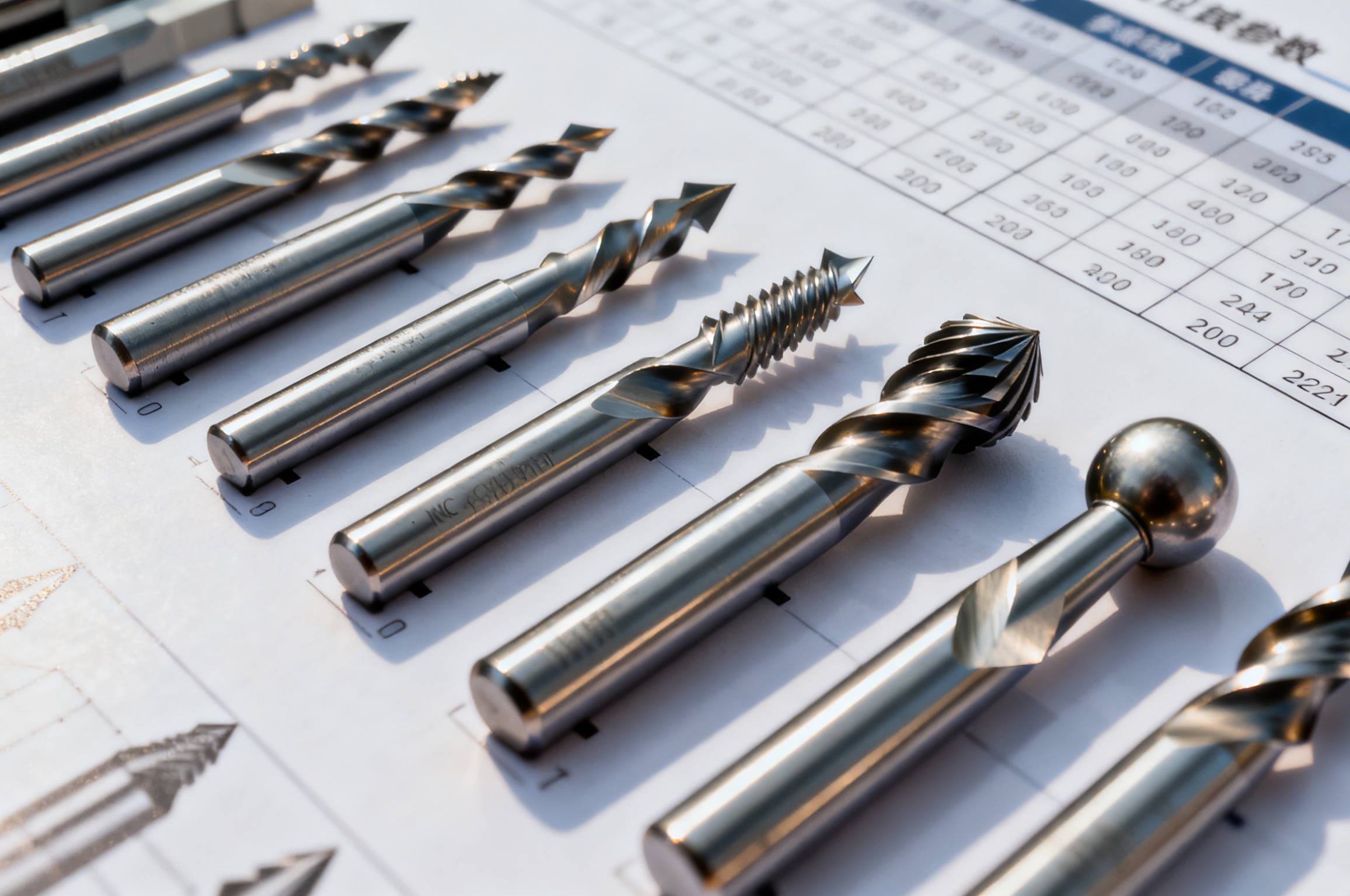
Secondly,the condition and geometry of the cutting tool cannot be overlooked.A sharp cutting edge can cleanly separate the material,while a worn tool will tear rather than cut material particles,resulting in a rough surface.Moreover,different tool tip radii or coating treatments can also significantly affect the outcome.Regularly inspecting and promptly replacing tools is the foundation for maintaining stable output.
Thirdly,the characteristics of the workpiece material are equally important.Aluminum alloy,stainless steel,or engineering plastics exhibit different behaviors during machining.Softer materials may be more prone to burrs,so it is necessary to adjust the process strategy for each material.At this point,a factory with rich experience can offer valuable advice,helping you avoid potential problems from the design stage.
Fourthly,the stability and rigidity of the machine tool itself form the cornerstone for achieving high-quality surfaces.A well-maintained,structurally robust CNC machine can effectively suppress vibration and ensure smooth and precise cutting actions.This is why professional manufacturers strictly enforce equipment maintenance plans and use high-performance machining centers in key processes.
Fifthly,the use of coolant is often underestimated.A reasonable cooling scheme can not only extend tool life but also promptly remove chips,preventing them from causing secondary scratches on the machined surface.In some cases,adopting an appropriate cooling strategy can even increase production efficiency by more than twenty percent.
Of course,in addition to the above technical aspects,maintaining clear communication with your manufacturing partner is equally important.Providing detailed technical drawings,clearly marking surface roughness requirements,and discussing details that may affect cost and delivery schedules will help the factory develop the most suitable production plan for you.Remember,measurable standards(such as Ra values)are far more helpful for mutual understanding than vague descriptions like“mirror-like finish.”
In summary,controlling the surface roughness of CNC-milled parts is a systematic project that involves multiple aspects of knowledge,including parameter settings,tool management,material science,and equipment condition.As a business seeking high-quality manufacturing services,understanding these basic principles will give you more confidence when collaborating with suppliers and enable you to more accurately assess their professionalism.Whether you need a small number of precision components or are preparing to launch a long-term production project,choosing a partner who pays attention to details and has transparent processes will undoubtedly add value to your products.
Finally,remember that excellent manufacturing is not just about turning blueprints into physical objects,but also about endowing each part with superior quality and reliability through rigorous process control.