






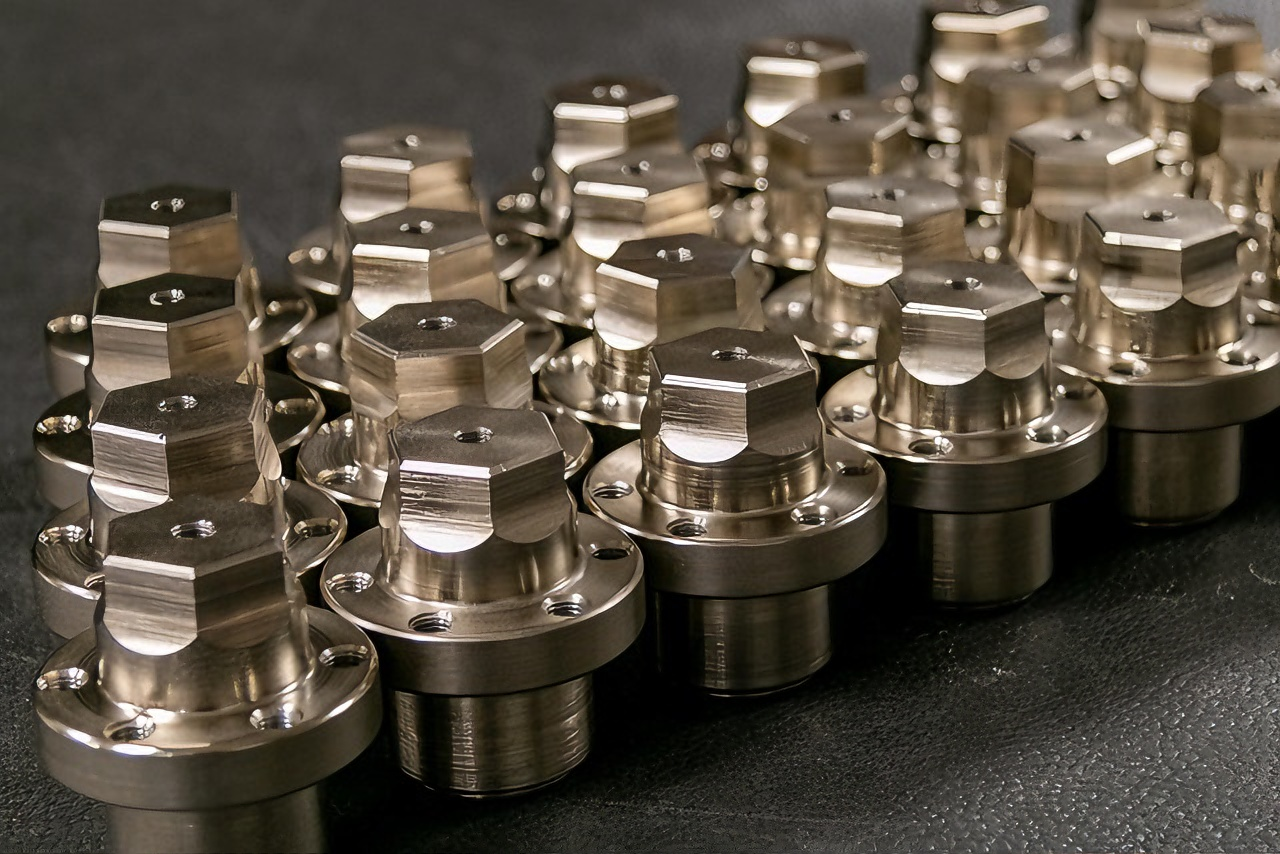
A: Prioritize partners with adaptive lathe-mill workflows.
Lathes thrive on standard bar stock for quick setups, but mills allow switching to alternative blanks like plates or extrusions when bars are delayed.
We dynamically adjust: if the bar is short, mill from plate to start, then lathe-refine critical fits. This kept a mining equipment buyer supplied during a 2024 steel shortage, delivering 7,200 components without a single missed deadline.
A: Insist on synchronized lathe-mill operations.
Milling delivers intricate patterns with sub-micron tools, while lathes ensure flawless cylindrical polishes.
Our method: mill detailed surfaces first at 25,000 rpm for Ra 0.18, then lathe the mating areas in the same hold. A photonics client hit Ra 0.12 across 4,100 optic mounts, boosting assembly yields by 22%.
A: Leverage rapid-prototyping via integrated systems.
Standalone lathes speed simple proofs, but full prototypes need milling for complex validations.
We prototype in tandem: lathe for base geometry in hours, mill for functional tweaks overnight. An EV startup cut its iteration cycle from 28 days to 9 on 900 motor housings, launching three months ahead.
A: Yes, with balanced lathe-mill tool management.
Lathes wear predictably on steady cuts, mills variably on dynamic paths—but combining them optimizes lifespan.
We monitor via sensors: lathe heavy loads, mill fine passes, extending tool life 35%. A heavy machinery supplier saved $16,500 on a 5,500-piece drivetrain order through this equilibrium.
A: Choose those investing in next-gen lathe-mill tech.
Emerging hybrids like 6-axis mill-turns handle evolving geometries that stump older setups.
Our fleet includes 16 such units: we tackled a biotech firm's 3,300 hybrid implants with embedded sensors, reducing revisions by 41% and setting them up for scalable growth.
Ready to integrate smarter processes into your procurement strategy?
Visit www.simituo.com for expert consultations and quotes.