






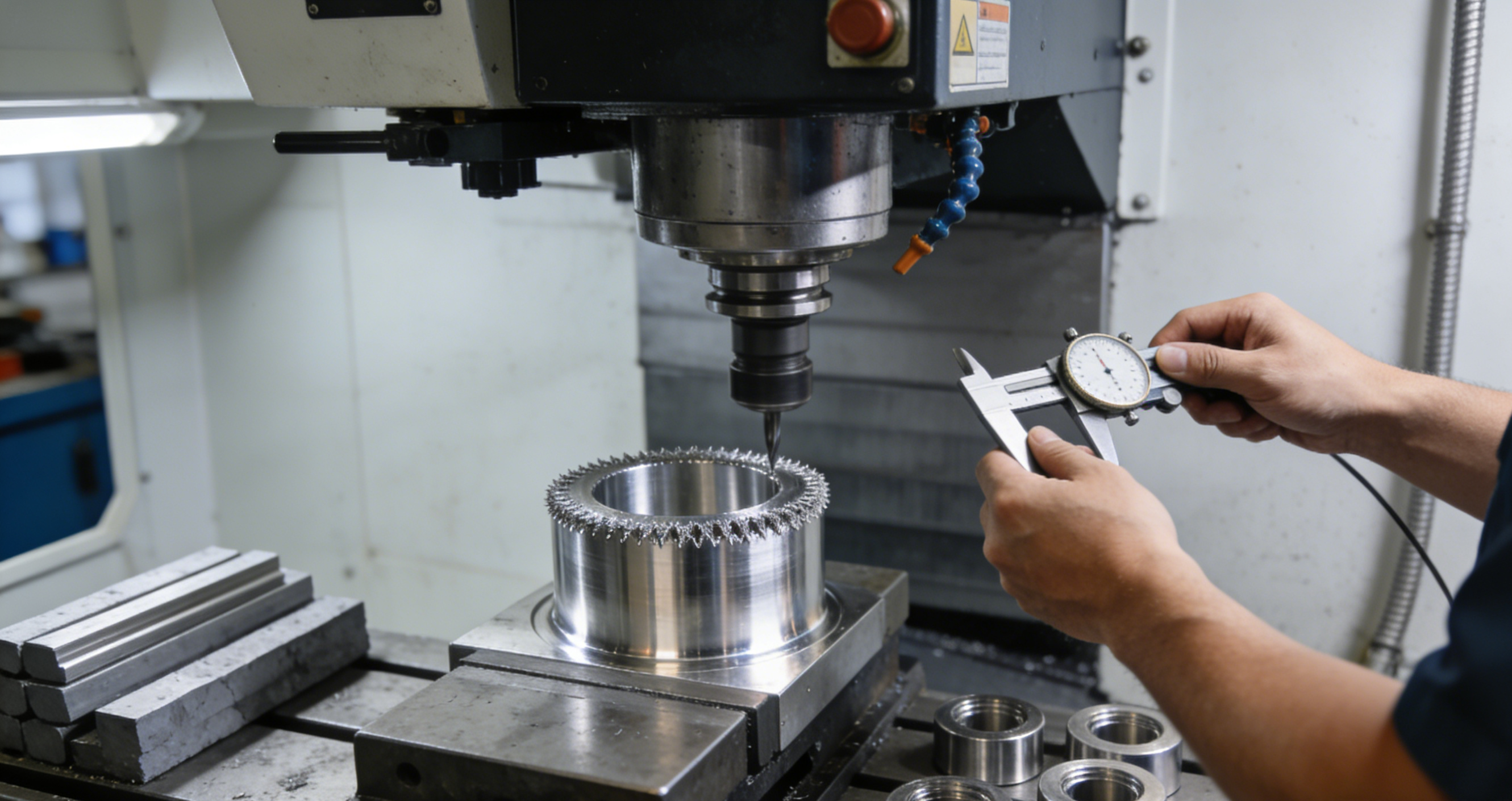
Q1: Why do vendors slap on huge markups for parts with tight corners or weird curves, claiming "milling limitations"?
A: It's often because they're running outdated 4-axis machines that can't twist into those nooks without extra jigs or passes, piling on labor and time.
But crank it to full 5-axis, and the spindle dances around curves like it's no big deal—hits every angle in one fluid motion. We had a gear supplier moaning about 2,500 curved housings taking ages; we flipped to 5-axis, markups vanished, quotes fell from 16 days to 7, and they pocketed $7,600 in avoided extras.
Q2: Heat buildup on stainless ruins our edges mid-cut, leading to brittle parts and failed tests. Can milling cool that fire?
A: Spot on—stainless heats up fast and warps if you don't manage it right.
The key is through-spindle coolant blasting at 120 psi with peck cycles to flush chips and chill the zone. No fancy stuff, just keeps edges sharp without the brittleness. An oil valve client was failing pressure tests on 3,600 pieces; we dialed in the coolant flow, failures dropped 25%, and they saved $6,200 on retests and scraps.
Q3: Complex tool paths for layered parts take days to tweak, driving up programming fees. How to slash that without sloppy work?
A: The drag comes from clunky software that forces manual overrides on layers, adding $3-5 per unit in hidden costs.
Switch to a dynamic CAM that auto-layers paths based on material stress—zips through in 20 minutes what used to take hours. A casting firm we supply was overpaying for 4,400 layered molds; our setup cut fees by 27%, work stayed precise, and there were no more sloppy shortcuts.
Q4: Thin slots vibrate and chip out, wrecking our tolerances and forcing over-designs. Any milling move to steady the ship?
A: Vibration's a beast on slots, turning tight fits into loose junk if feeds push too hard.
We ease it with slotting mills and ramp-in entries—gradual dives that spread force without the chipping. A circuit board supplier was over-designing 5,300 slots to compensate; we ramped up entries, tightened tolerances by 22%, and they ditched the bulky fixes for leaner, cheaper parts.
Q5: Alloy mixes in prototypes spike downtime from constant recalibrations. How does milling flex without the constant pauses?
A: Mixes freak out rigid mills, with recalibs eating 25% of runtime as tools fight the switch.
Go adaptive with variable-speed spindles and preset alloy profiles—flips settings in seconds. An engine parts buyer scaled 6,000 mixed prototypes with us; downtime halved, flex improved 29%, and they hit production without the usual calibration chaos.
Frustrated with milling mishaps tanking your timelines? Let's make it right.
Visit www.simituo.com for hands-on consultations and quotes that deliver.