






As electronic devices become increasingly compact yet more powerful, their inner core—those tiny precision parts—becomes the key to technological innovation. These components, often smaller than a grain of rice, demand incredible accuracy and consistency. At the forefront of manufacturing, CNC machining technologies, particularly CNC milling and CNC turning, have become the cornerstone of achieving such micro-precision fabrication. Understanding how these two core processes adapt to different part requirements is crucial for any decision-maker seeking a reliable manufacturing partner.
Let's start with CNC milling. Imagine an exceptionally patient sculptor, holding precise tools, able to carve out complex shapes bit by bit from a solid block of material. This is precisely where CNC milling excels. It uses high-speed rotating multi-edge cutting tools to machine workpieces, excelling at creating complex geometries, precision grooves, blind holes, and three-dimensional surfaces. For irregular housings in electronic devices, brackets with fine cooling fins, or connectors requiring built-in slots, the flexibility and versatility of CNC milling are irreplaceable. It is essentially the art of "subtraction," achieving final forms by removing material, providing vast freedom for design.
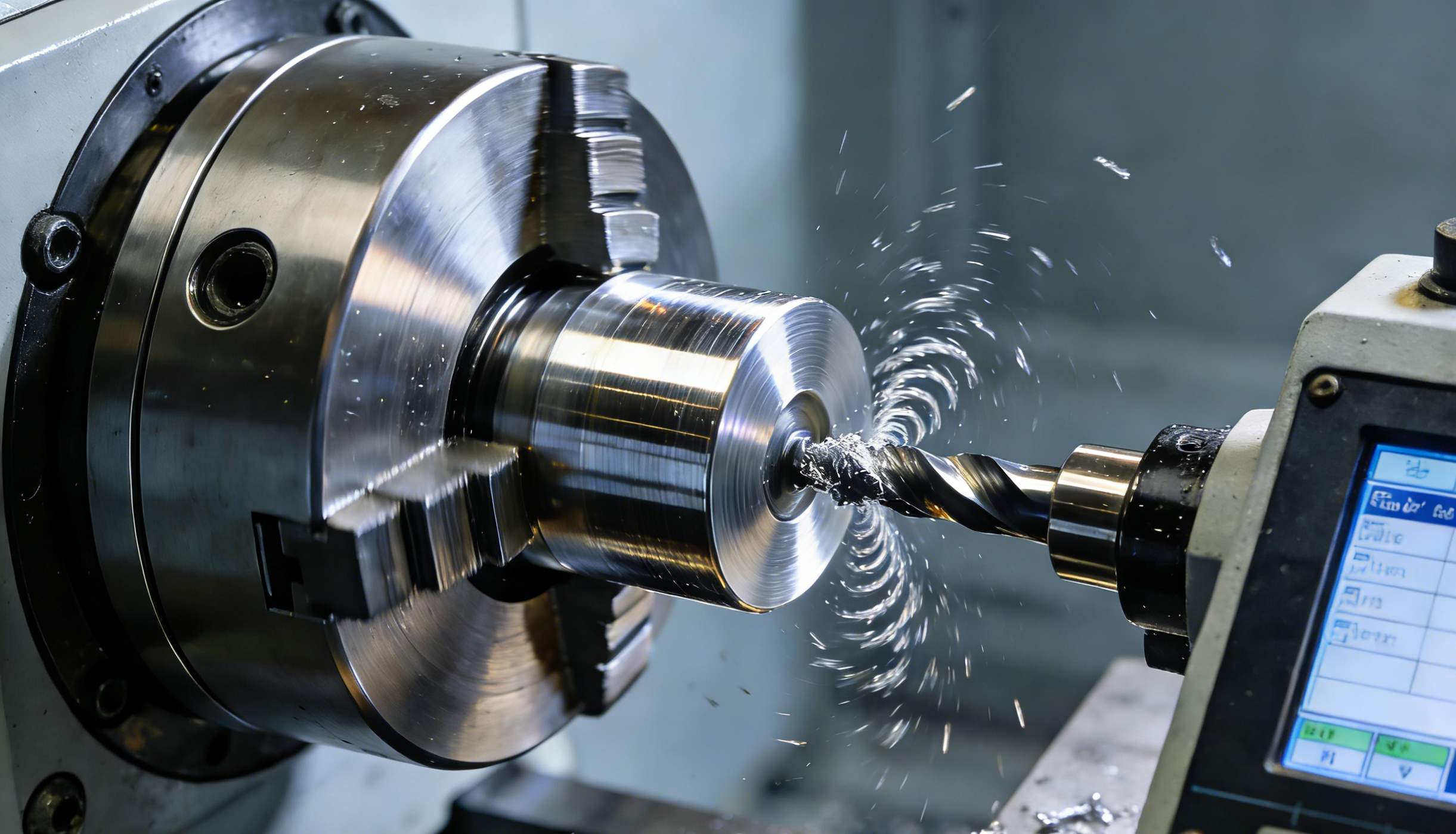
CNC turning, on the other hand, presents a different picture. It focuses more on the "beauty of rotation." The workpiece is firmly fixed on a spindle rotating at high speed, while a single-point cutting tool moves linearly or curvilinearly to perform cutting. This method is particularly adept at efficiently producing cylindrical, conical, or disc-shaped rotational parts. Consider the tiny shafts, precision bushings, threaded sections of joints, or metal tips of probes in devices—these axially symmetric components are often the perfect stage for CNC turning processes. Its advantages lie in high efficiency for rotational parts, excellent surface finish, and strict concentricity control.
However, the most powerful manufacturing solutions are often not a solo performance of a single process, but rather an intelligent symphony of both. Many complex micro parts cannot achieve their final form through just one process. This is where precision machining factories demonstrate their true value. A mature manufacturing workflow might be: first, using CNC turning to quickly and precisely shape the basic rotational contour and primary holes of the part; then transferring to a CNC milling station to machine side flats, non-circular holes, or fine text markings. This integrated manufacturing strategy combines the efficiency of turning with the flexibility of milling, optimizing production cycles and overall costs while ensuring the highest precision.
In the context of precision manufacturing, process selection is only half the story. The other half is deeply rooted in the factory's quality culture and process control system. From Swiss-grade precision machine tools and ultra-fine grain carbide tools to constant temperature and humidity processing environments and real-time in-process inspection probes, every detail determines success or failure at the micron level. True precision manufacturing is the seamless integration of CNC milling and CNC turning capabilities into a traceable system from raw material certification to final full-dimension reporting.
Therefore, finding the right solution for your electronic device's micro-precision parts goes far beyond comparing technical parameters of CNC milling and CNC turning. It is about understanding the essential geometric requirements of the parts and, more importantly, finding a manufacturing partner that seamlessly integrates advanced processes, rigorous workflows, and engineering wisdom. This deep-level matching ensures that every tiny component reliably carries the grand vision of product functionality, creating excellence within the smallest dimensions.