






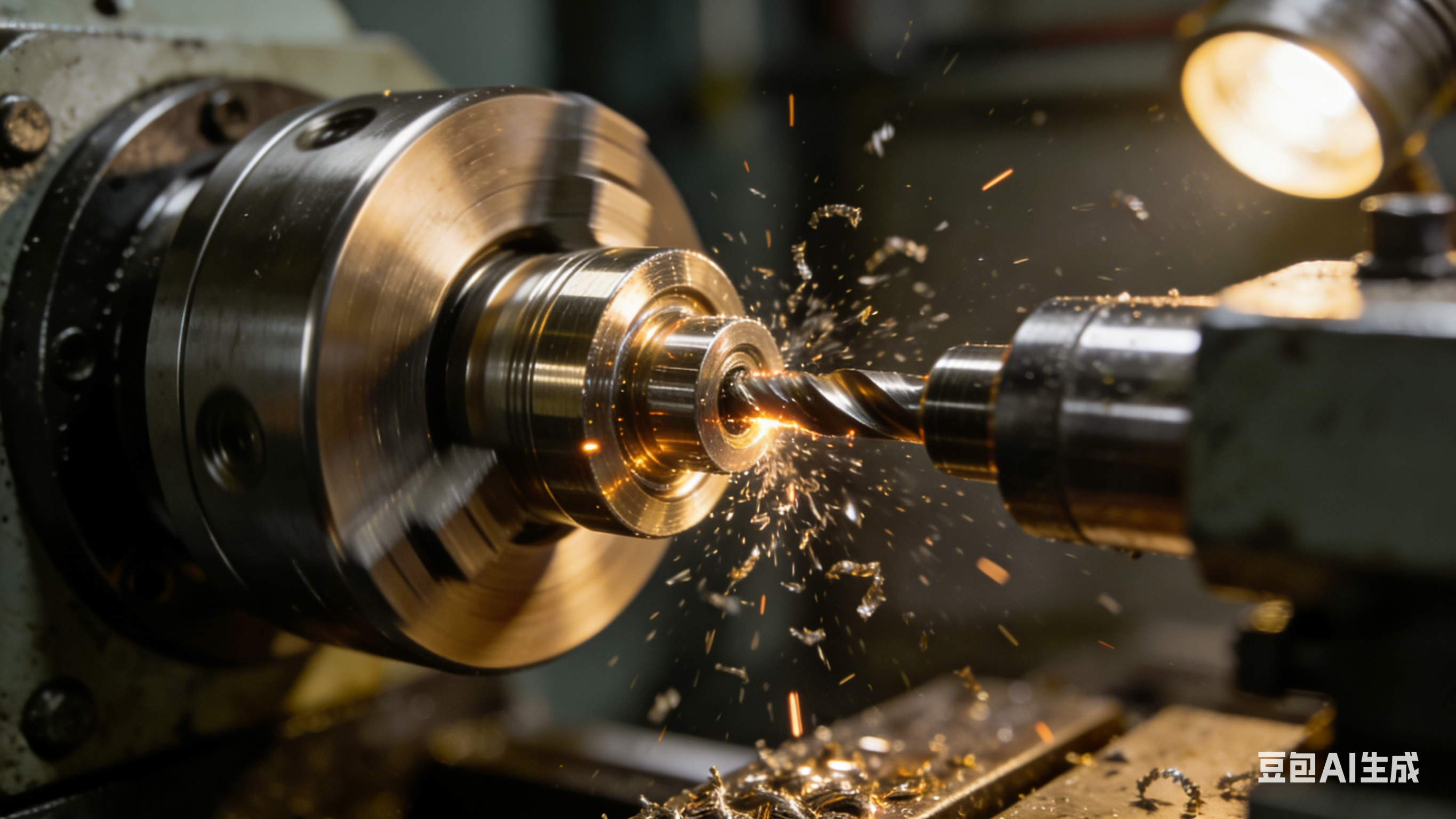
At the cutting edge of the manufacturing industry,the ability to perform high-precision machining on tiny components often determines the ultimate performance and reliability of a product.When we focus on those complex-structured,minuscule precision parts,traditional single-process methods often fall short.At this point,integrated solutions incorporating computer numerical control(CNC)technology reveal their unique advantages,with the synergistic application of CNC turning and milling being particularly crucial.
Let us first understand the core characteristics of these two basic processes.The CNC turning process is akin to a precision modern potter's wheel.It shapes the material by rotating the raw material and using a fixed cutting tool,excelling at efficiently manufacturing components with cylindrical symmetry,such as microshafts,sleeves,and connectors.In contrast,CNC milling is more like a masterful sculptor.It secures the material on a worktable and uses a high-speed rotating multi-edge tool to cut,capable of creating complex contours,grooves,and three-dimensional curved surfaces.Together,these two processes form the two main pillars of our factory's precision machining capabilities.
However,the real innovation does not come from their individual operations but from their seamless integration and deep collaboration within the same production system.A typical example is that a microsensor casing may first need to be processed on a CNC lathe to create the reference outer and inner circles and inner holes,and then transferred to a CNC milling machine to complete the side's irregular openings and mounting hole positions.This smooth process transition not only minimizes the cumulative errors caused by repeated clamping but also ensures high consistency in the geometric shape and positional tolerances of the final product.This is the essence of modern manufacturing philosophy—integrating different advantageous technologies into a coherent and efficient production flow.
For engineers and procurement decision-makers,understanding the value of this synergistic strategy is crucial.It can directly translate into shorter product development cycles,more competitive production costs,and better realization of complex designs.When your project involves multi-feature,low-volume micro parts,finding a partner who can skillfully master and integrate CNC turning and milling services means finding a reliable path to turn innovative designs into real products.
In summary,on the stage of modern precision machining,CNC turning and milling are no longer isolated choices.Their combined application represents a more advanced and flexible manufacturing philosophy.The next time you review your micro part design,you might consider:how to leverage the combined power of these two technologies to bring your creativity to life more precisely and efficiently.