






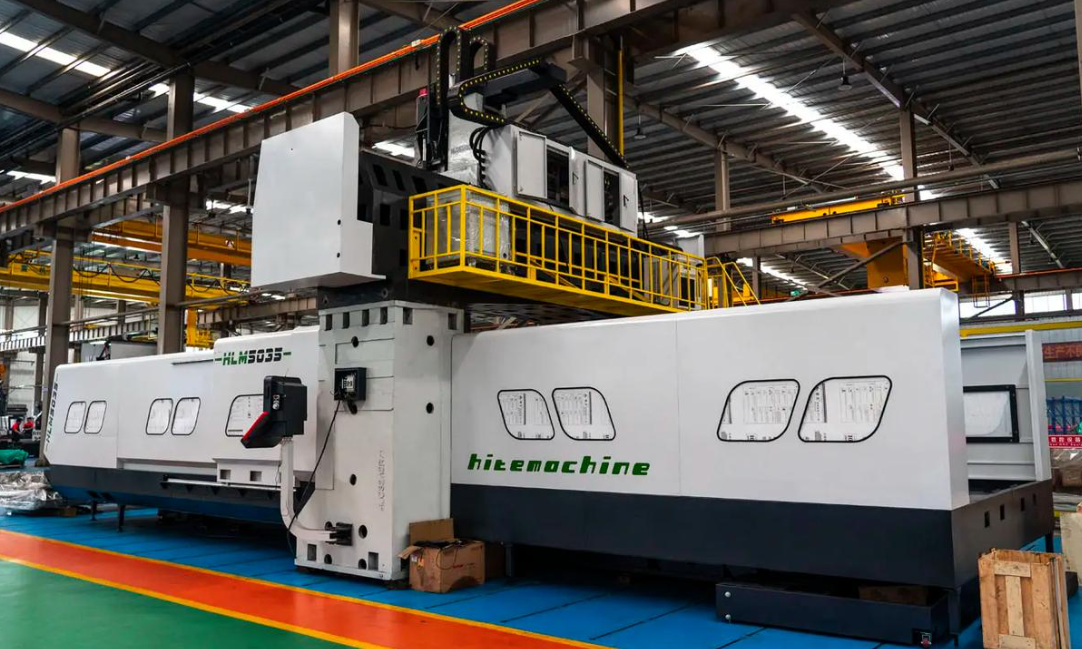
In today’s hyper-competitive manufacturing landscape, a process that is both highly efficient and highly accurate sits at the heart of every sourcing decision. As a purchasing manager you are constantly forced to choose among dozens of competing technologies, and CNC gantry machining keeps rising to the top of the short list. The article below answers the questions we hear most often, giving you the real-world data you need to judge whether the technology fits your operation.
Q1. My project involves large structural parts that are already too big for our existing equipment. Is a CNC gantry really the only way forward?
A. Once a work-piece outgrows a conventional envelope, a gantry becomes the only practical option. The open work-zone easily accepts parts several metres wide while holding micron-level accuracy. A recent energy-sector job required an aluminium-alloy frame. Multiple set-ups on horizontal machines stacked positional errors beyond tolerance; a single gantry completed every face in one cycle and held total tolerance within microns. Eliminating re-fixturing removed both risk and lead-time.
Q2. We machine heavy work-pieces and chatter ruins surface finish. How does a gantry frame overcome this?
A. Chatter is the enemy of large parts. A gantry’s closed-frame architecture and distributed damping absorb cutting forces instead of transmitting them to the part. A heavy-industry customer machining cast-iron bases used to re-work 30 % of each batch because of chatter marks. After moving to a gantry centre with dynamic compensation, surface-roughness improved by more than 40 % and tool life doubled. Rigidity, not operator skill, was the decisive variable.
Q3. Finance push back on the high purchase price. How do I prove the business case?
A. Shift the discussion to full-life cost. A gantry’s ability to mill, drill, bore and tap in one set-up collapses the machine pool. In a recent rail project three stand-alone machines were replaced by one gantry cell; labour fell 45 %, energy 32 % and queue-related scrap 60 %. Pay-back was inside 24 months; every year after drops straight to the bottom line.
Q4. Emergency orders arrive constantly and our supply chain is too slow. Can a gantry shorten delivery?
A. Absolutely. Modular programming, automatic head changers and in-cycle probing let a gantry switch parts in minutes. Last month five titanium aerospace prototypes were programmed, cut, measured and shipped in 72 h instead of the contractual five days. The hardware-software stack, not higher rpm, delivered the speed.
Q5. Complex geometries create accuracy drift. How does the gantry guarantee repeatability?
A. Modern gantries use simultaneous five-axis motion and closed-loop scales. A medical-device housing with sculpted free-form surfaces used to drift 30 µm over a 200 mm contour; adaptive tool-path control on the gantry held the same batch within 6 µm for 1 000 consecutive parts. Precision is engineered into every motion, not patched in post-process.
Q6. Material yield is poor and expensive alloys are killing our margin. Can a gantry help?
A. Intelligent nesting and common-line cutting raise sheet utilisation. Customers now machine multiple part numbers from a single aluminium or titanium plate in one set-up, cutting remnant scrap from 25 % to below 8 %. On high-value alloys that difference alone flips the job from loss to profit.
Q7. Chasing different suppliers for every operation wastes engineering hours. Can one partner do it all?
A. That is exactly why integrated gantry parks exist. From 3-D model validation, roughing, finishing, CMM verification to final packaging, every step stays under one roof. You deal with one project manager, one schedule, one dataset. Removing hand-off delays is a hidden, but very real, cost saving.
Bottom line: CNC gantry machining is no longer a niche option for oversized parts,it is a strategic lever that combines rigidity, accuracy and flexibility to compress lead-times, cut unit cost and derisk quality. If you want to explore how the technology can slot into your supply chain, visit us at www.simituo.com