






In today’s precision component sector, gantry CNC technology has become the industry focus because of its outstanding performance and wide applicability. This blog uses a question and answer format to examine the core principles, technical advantages, and innovative material saving and environmental applications of gantry CNC machining. The content is written for senior U.S. purchasing managers and aims to give decision makers clear insight into how the technology drives an efficient and sustainable manufacturing flow.
Question 1: How does gantry machining ensure the quality of precision components?
Answer 1: Gantry machining guarantees stable quality through its unique rigid structure. The bridge and columns form a stable frame that greatly suppresses vibration during cutting, delivering higher accuracy and better surface finish. Under precise CNC control, the technology maintains micron level tolerances over long production runs, making it ideal for complex parts that demand strict dimensional stability.
Question 2: What is the core material saving advantage of gantry CNC?
Answer 2: The core advantage is intelligent material management combined with high efficiency cutting. Advanced CAM software optimizes tool paths and nesting layouts to maximize the number of parts on each sheet, sharply reducing scrap. In addition, the one setup multi process capability of gantry machining avoids tolerance loss caused by repeated repositioning, raising material utilization from the start and directly lowering raw material cost per precision part.
Question 3: How does gantry machining reflect modern environmental responsibility?
Answer 3: Gantry machining meets environmental duty from both energy and resource angles. Its structure allows high power motors to cut efficiently, shortening cycle time and total energy use per part. Systematic coolant filtration and recycling units plus centralized metal chip handling ensure that by products are controlled and reused. This full flow resource efficiency optimization lowers environmental footprint while the operation pursues economic gain.
Question 4: Why is gantry CNC technology indispensable for large complex precision parts?
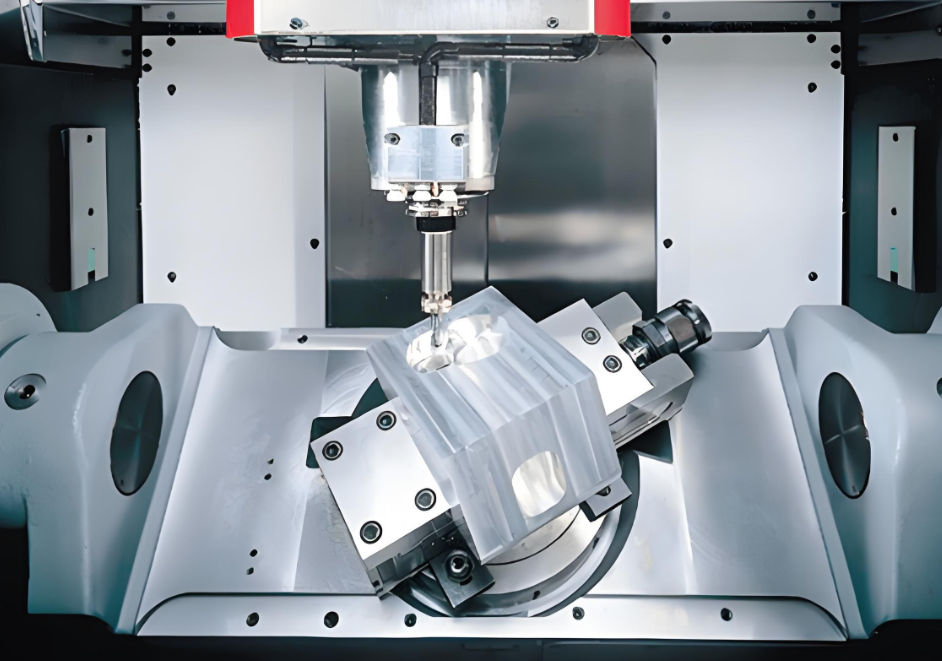
Answer 4: For large complex parts, gantry CNC offers an unmatched solution. The wide work table and high load capacity make it possible to machine large blanks. Multi axis interpolation allows the tool to approach the work from many angles, so cavities, curved surfaces, and hole patterns can be completed in one clamping. This preserves accurate relative positions among part features and avoids accuracy loss and low efficiency caused by multiple transfers and repeated setups.
Question 5: How will gantry machining technology evolve in the future?
Answer 5: Future gantry machining will integrate deeper digital and intelligent functions. Built in sensors and real time data analytics will enable adaptive cutting and predictive maintenance, further raising overall equipment effectiveness and process stability. On the sustainability side, lighter moving structures and energy recovery systems will set new benchmarks for lower energy per unit of material removed, pushing the industry toward greener and more efficient production.
Gantry machining blends accuracy, efficiency, and sustainability to give high end manufacturing a key solution. Its continuous evolution keeps redefining the potential limits of precision component machining.
For more information on our gantry precision machining capacity, please visit our official website www.simituo.com.