






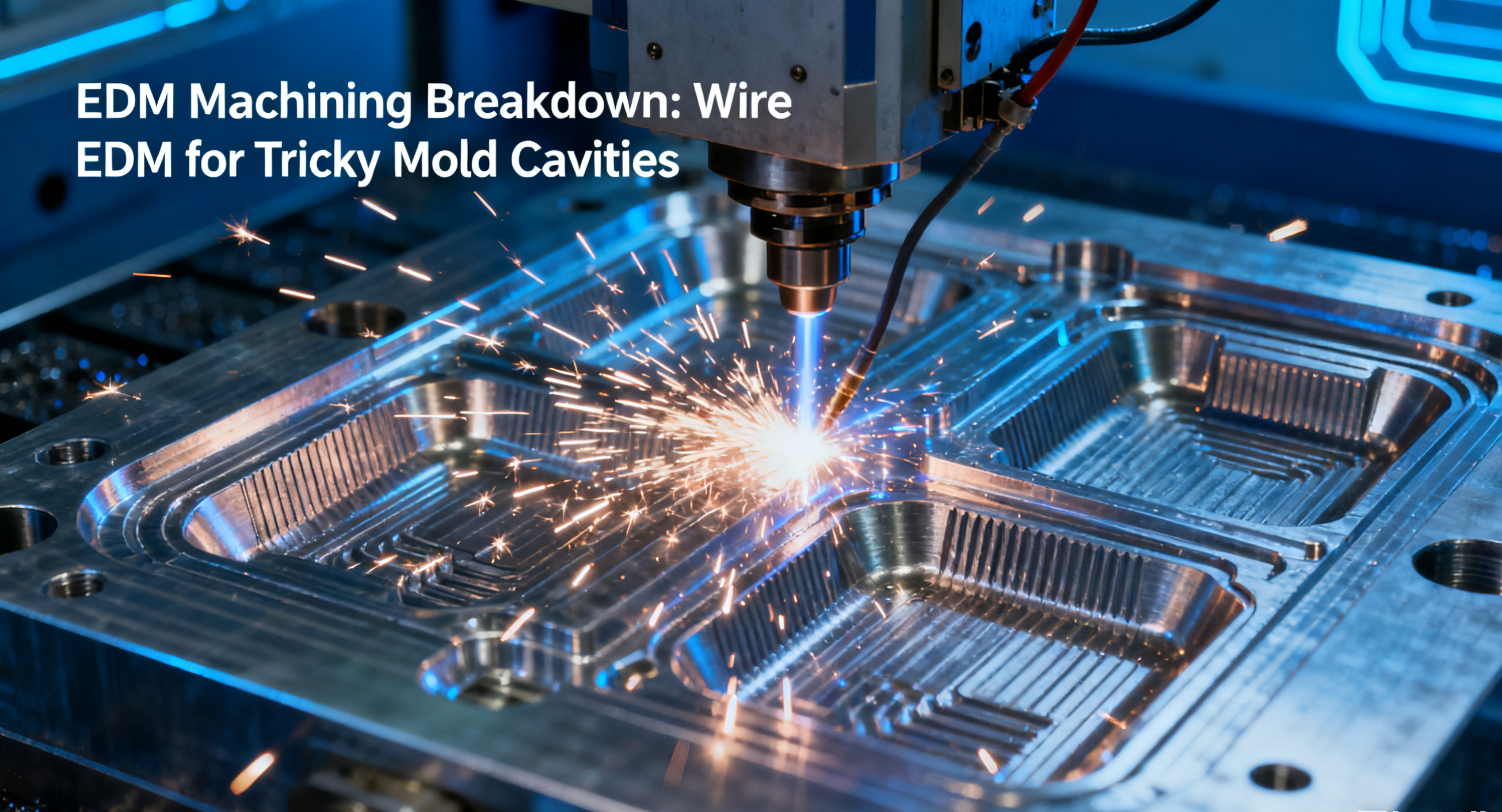
A mold shop I know got stuck on a connector housing with six undercuts and a 0.3 mm rib inside a 2 mm deep pocket. Standard milling left radius marks, and the electrode for sinker EDM wore out after three cavities. The customer needed 48 cavities finished in ten days, or the whole injection line sat idle. Scrap one cavity, and the $28k steel block was trash.
The Undercut and Thin-Rib Nightmare
The pain was reaching and finish. End mills couldn’t turn sharp enough for the rib, and high-speed spindles chipped the H13 tool steel. Sinker electrodes took four hours to dress per cavity, burning brass and time. Surface finish hit Ra 3.2 with milling scars—too rough for the plastic flow test.
It’s the usual mold jam: tight spots the cutter can’t touch, yet the cavity must be mirror-smooth and exact.
How Wire EDM Cut Through the Mess
They wheeled in a 0.25 mm brass wire on a submersible machine. One rough pass, two skim cuts, and the rib came out square with Ra 0.4. The wire threaded the start hole in 30 seconds, with no electrode wear, no recast layer. Total per cavity dropped to 68 minutes, including setup.
What made it click:
- No Tool Wear: Wire spools are fresh every pass.
- Sharp Corners: 0.01 mm radius max, rib stood crisp.
- One Program: Same G-code for all 48, zero drift.
All cavities passed the leak-down test first shot. The mold ran 100,000 shots without flash, and the customer locked the next platform order on the spot.
When Wire EDM Beats Milling or Sinker
Use wire for steel cavities under 50 mm deep with ribs thinner than 0.5 mm or internal corners under 0.1 mm radius. Sinker still rules for blind pockets over 60 mm. I’ve seen coolant manifolds, medical impellers, and gear cavities all switch to wire and ship weeks early because the block never left the EDM tank.
For procurement weighing mold quotes, the rule is simple: if the drawing shows a corner a ball mill can’t make, send it to wire. Count the cavities, divide the hours, and the cost lands where it should. More on this at www.simituo.com.