






Between the desert and the sea, the industrial pulse of the Middle East region presents unique challenges to industrial equipment. High temperatures, high salinity, and high humidity make corrosion an invisible enemy of precision parts. Today, we would like to discuss with you how to use precise CNC processing techniques to cast an invisible "armor" for these non-standard parts.
Corrosion is never a single form of threat. It may manifest as uniform erosion or attack in more concealed ways such as pitting and crevice corrosion. Especially for those complex-shaped and functionally special non-standard parts, traditional protective measures often fall short. This is precisely where modern precision manufacturing technology comes into play. The core lies in that we are not merely processing a part but using manufacturing techniques to anticipate and resist environmental pressures throughout its entire life cycle.
The fight against corrosion begins with material selection but is won at the microscopic level of processing accuracy. This is where CNC processing plays a crucial role. Through precise cutting controlled by computer numerical control, we can lay a perfect geometric foundation for the part's surface. Whether it is the delicate shaping of complex contours by CNC milling or the efficient forming of rotary parts by CNC turning, the goal is the same: to achieve as uniform and smooth a surface as possible. Because every tiny scratch, pit, or unevenness can become a starting point for corrosion.
However, a smooth surface is only the first step. In many high-end applications, parts need to withstand the dual tests of chemical corrosion and physical wear. At this point, precision processing techniques extend to the realm of surface integrity. Through optimized tool paths, precise control of cutting parameters, and strict management of cooling and lubrication, we aim to create a favorable residual stress distribution and fine microstructure on the part's surface. This process essentially uses CNC manufacturing technology to endow the material surface with stronger fatigue resistance and stress corrosion cracking resistance.
For many critical components, such as valve cores, sensor housings, or special fluid channels, the surface quality of the internal flow channels is equally crucial. Multi-axis CNC milling and precision drilling technologies make it possible to process these complex internal cavities that are not visible, ensuring consistent protection from the inside out and preventing sudden failure due to internal corrosion.
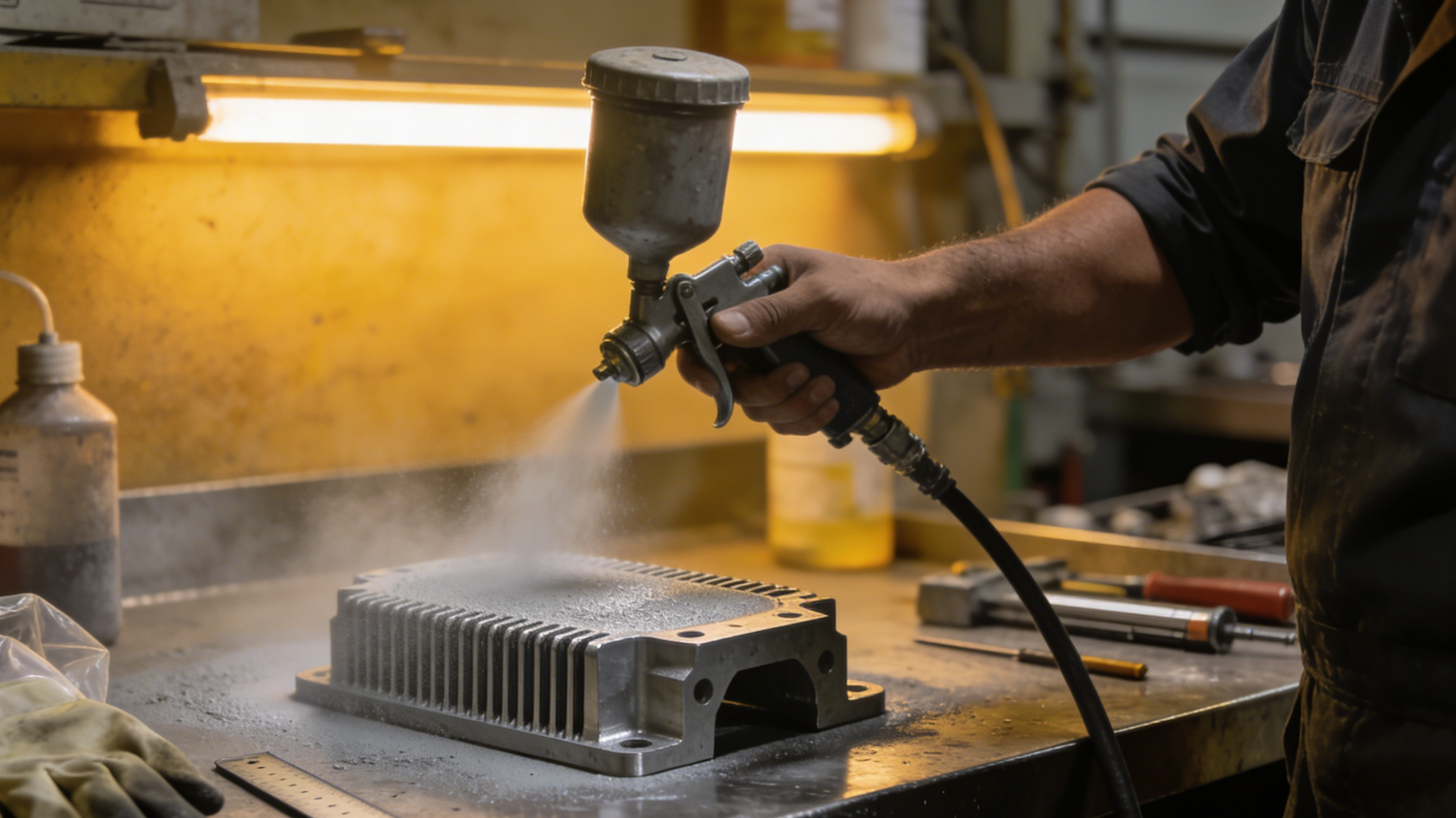
Of course, the end of the process does not come when the machine stops. A complete anti-corrosion solution cannot be separated from the continuity from processing to post-treatment. Precision processing provides an ideal base for subsequent coating, passivation, or heat treatment. A part with precisely controlled dimensions and surface roughness can ensure that protective coatings adhere uniformly and firmly, without premature peeling due to underlying defects during use.
In our factory, the manufacturing process of each non-standard application part is a micro-engineering project tailored to a specific corrosive environment. It integrates material science knowledge, in-depth understanding of corrosion mechanisms, and the ultimate mastery of CNC precision processing technology. We believe that true lasting value comes from seamlessly integrating anti-corrosion design thinking into every manufacturing step from digital models to physical parts.
Ultimately, the fight against corrosion is a long-term battle of details. It requires flexible solutions that go beyond standard answers and a persistent commitment to precision manufacturing. When the parts are delivered and work silently in the industrial sites of the distant Middle East, their ability to resist harsh environments is the most silent yet powerful proof of the value of the processing technology.