






Q1: Why do my suppliers always whine about "impossible" angles on parts, adding weeks and bucks to every quote?
A: It's because they're stuck with old 3-axis rigs that force awkward flips and reclamps for those tricky spots, turning a simple job into a circus.
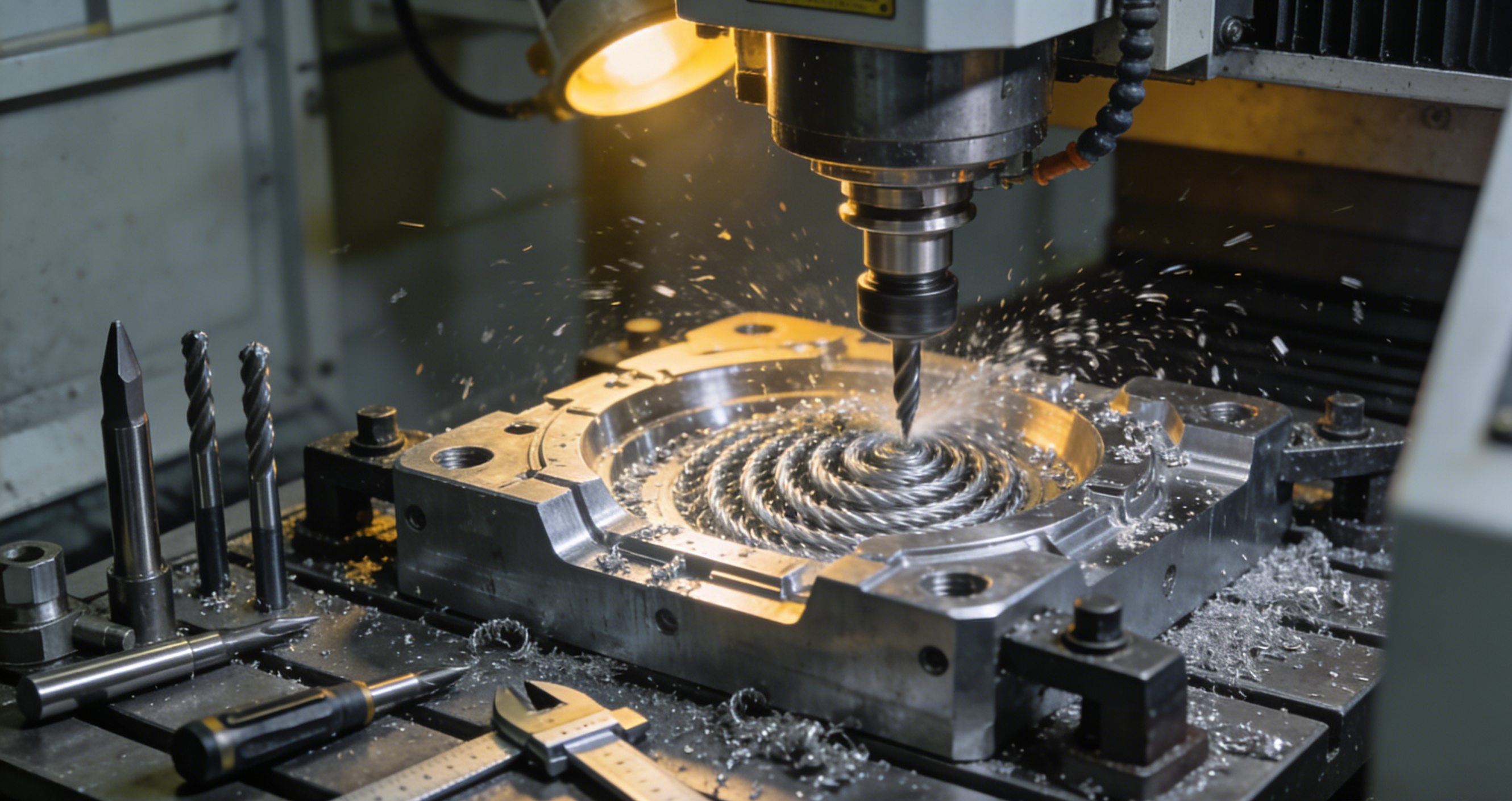
But flip to 5-axis milling, and it's game over—the head tilts and rotates like a gymnast, nailing all sides in one smooth go. I remember this robotics client griping about 2,400 arms taking forever; we switched to 5-axis, quotes dropped from 17 days to 8, and they saved $8,100 without a single alignment headache.
Q2: Burrs and rough edges on aluminum prototypes are killing our assembly fits—any milling magic to clean that mess?
A: No magic, just smarter moves. Aluminum loves to gum up and burr when you push too hard with straight-line cuts.
The real play is high-speed milling with sharp, coated tools and a light touch—keeps edges crisp without the fuzz. One implant shop we hooked up ditched hand-filing on 3,700 pieces; finishes went from jagged Ra 1.2 to silky 0.6, trimming labor by 25% and getting prototypes fitting like gloves on the first try.
Q3: Programming for wavy surfaces drags on forever, inflating our costs. How can milling make that quicker without skimping?
A: It's the old-school coding that's the drag—manual tweaks eat hours on curves.
Lean into adaptive software that maps paths like a GPS, dodging overloads and speeding through. A mold maker buddy of ours was quoting sky-high for 4,500 forms; our CAM-driven mill slashed programming to 15 minutes per, quotes fell 24%, and quality stayed rock-solid—no shortcuts, just smarter flow.
Q4: Thin walls vibrate like crazy during cuts, ruining our tolerances. Got a milling fix that doesn't involve babying the machine?
A: Yep, vibration's a killer on slim stuff, turning tight specs into wobbly junk.
Counter it with damped holders and step-over strategies—spreads the force evenly, like steady hands on a steering wheel. We steadied a batch of 5,100 telecom brackets for a client; Ra tightened from 1.5 to 0.8, rejects plunged 21%, and inspections became a breeze instead of a battle.
Q5: Mixed alloys in one run spike our tooling bills—how does milling adapt without constant swaps and skyrocketing expenses?
A: The pain comes from rigid setups that freak out on material switches, burning through tools like candy.
Go modular with quick-change systems and alloy-specific coatings—adapts on the fly without pauses. An auto supplier ramped 6,200 mixed hubs with us; tooling costs held steady, flow improved 26%, and they scaled without the usual wallet-draining drama.
Ready to mill past those headaches and get parts that actually work?
Visit www.simituo.com for real-talk consultations and quotes that won't sting.