






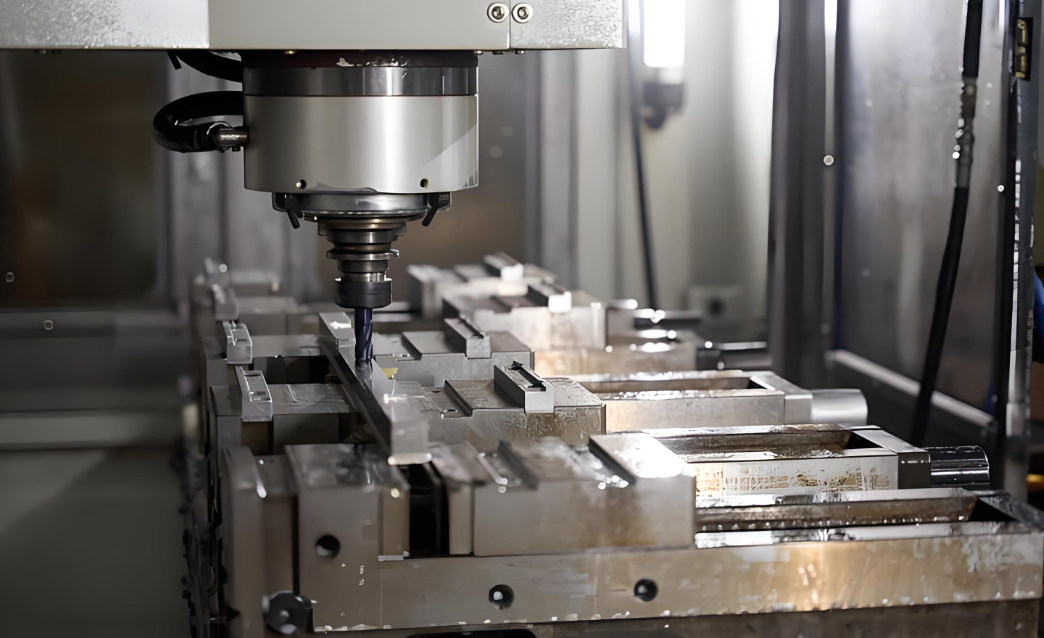
In today’s precision-manufacturing arena, gantry CNC machining has become the bedrock for producing complex, large-scale and highly demanding components. It represents not only the pinnacle of machine-tool technology, but the very embodiment of engineering confidence and superior quality. Procurement decision-makers who seek top-tier suppliers consistently place the depth and breadth of gantry capability at the center of their evaluation. The following Q&A systematically unpacks the core value and technical substance of gantry CNC machining services.
Q1. Compared with other CNC platforms, where do gantry machining centers fundamentally excel?
A1. The gantry’s portal frame architecture is the source of its dominance. The closed, bridge like structure delivers unrivaled rigidity and damping, neutralizing the extreme cutting forces and vibrations generated when removing large amounts of material. This allows the machine to maintain micron level accuracy across its full travel while executing heavy roughing cuts or ultra fine finishing passes on oversized workpieces. For large molds, aerospace structures and power-generation bed plates, the gantry guarantees consistent geometric tolerances that vertical or C-frame machines simply cannot sustain over comparable volumes.
Q2. When selecting a gantry CNC partner, how can I verify that claims of “high-value precision parts” are genuine?
A2. True value is not the lowest quote—it is the lowest total cost of ownership. A qualified gantry house proves value through layered technical integration: intelligent tool-path strategies that shorten cycle time and maximize material yield; proven parameter libraries for exotic alloys (Ti-6Al-4V, Inconel, maraging steels) that eliminate costly trial cuts; and single-setup, multi-face machining that removes re-fixturing errors and queue time. The outcome is a balanced equation where precision, lead-time, unit cost and in-service performance all move in the customer’s favor.
Q3. How does gantry CNC technology stabilize micron-level accuracy lot after lot?
A3. Accuracy is engineered into every subsystem. The foundation begins with grade-C3 or better ball-screws, dual-driven Y-axis racks, liquid-cooled spindles and real-time thermal compensation maps. Process discipline adds adaptive feed control, in-cycle vibration monitoring and spindle-load feedback that automatically offsets tool wear. Finally, a living database—hardened by thousands of validated cuts—matches cutting data to material grade, cutter geometry and stock condition, ensuring each part, whether prototype or production batch, replicates the last to sub-micron repeatability.
Q4. For highly complex, integrity-critical components, what unique value does a gantry solution provide?
A4. Complexity is converted into a single, monolithic reality. By combining 5axis contouring with a massive work envelope, the ganty performs continuous, multi-angle machining in one setup, eliminating the stacked tolerances and stress concentrations inherent in multi piece assemblies. The result is a near-net monolith with superior stiffness, hermetic sealing surfaces and uninterrupted load paths attributes indispensable for MRI gantries, semiconductor vacuum chambers and satellite optical benches where any joint is a potential failure node.
Q5. How can gantry CNC services stay both agile and economical under rapid R&D cycles and low volume demands?
A5. Modern gantry cells are built for digital agility. From the moment a native CAD file is received, automated CAM pipelines generate, simulate and post-process cutter paths within hours. Modular, zero-point fixturing systems allow blanks to be swapped in minutes, not shifts, while probing routines auto-compensate for stock variation. Consequently, even a one-off prototype is produced at production-level accuracy without the non-recurring engineering cost traditionally associated with small lots, giving innovators an affordable on-ramp from concept to market validation.
In the world of precision manufacturing, technological depth determines product altitude. Gantry CNC machining exists to convert the pursuit of ultimate accuracy and reliability into a repeatable, scalable reality—no matter how daunting the engineering challenge. To explore how this capability can become a deterministic advantage for your next program, contact us through our official portal: www.simituo.com.