






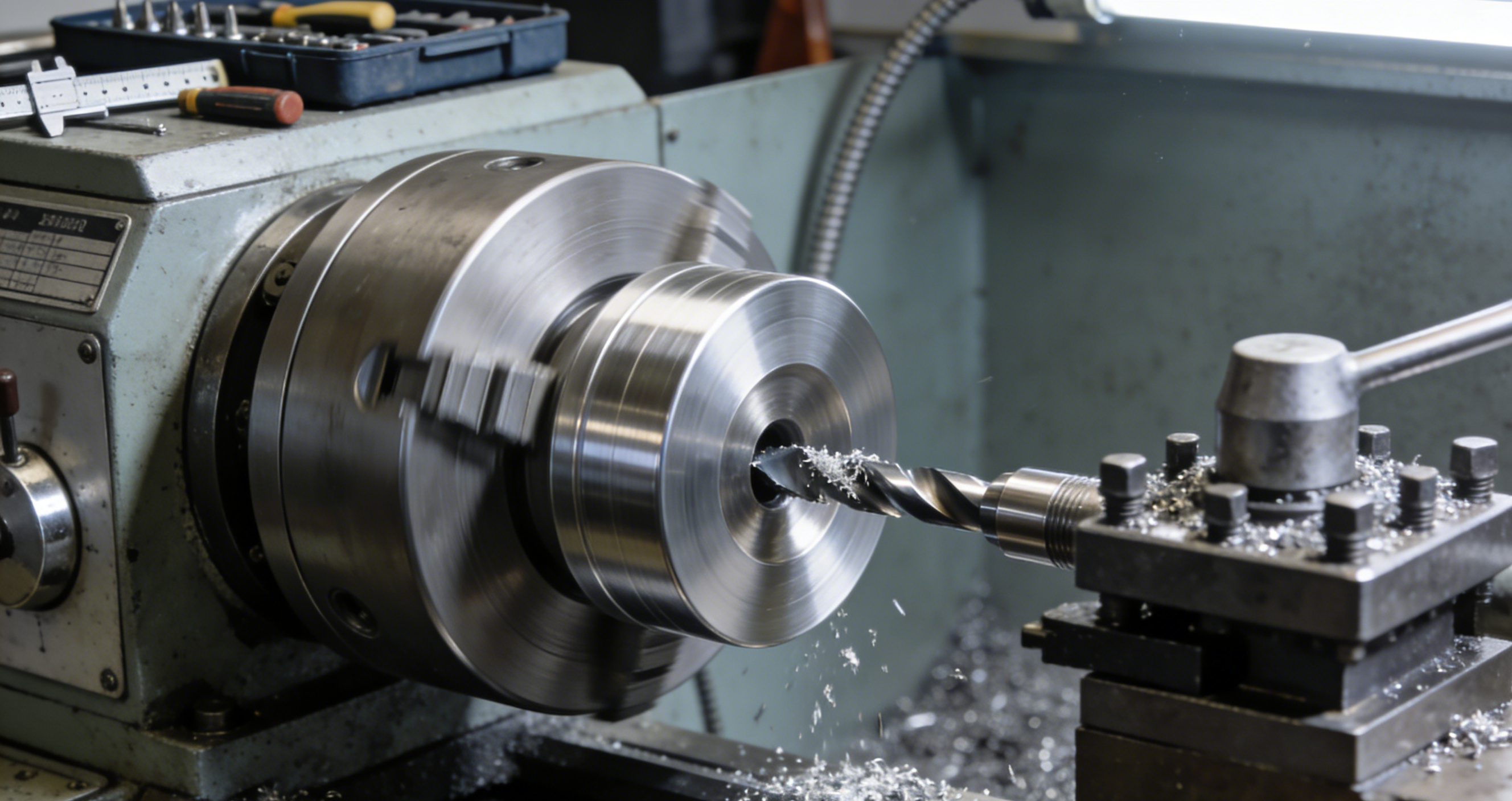
Q1: Suppliers swear by "high-speed turning," but our parts still have those pesky tool marks that fail inspection. What's the missing piece?
A: Tool marks sneak in when vibration or dull inserts take over, even at high speeds.
We counter with ceramic inserts and steady rest supports that keep the cut clean and stable. A gearbox builder we supply was failing 9% of inspections on 2,600 shafts due to marks; after our switch, failures dropped to 0.7%, saving $8,200 in rejections and letting them pass audits with ease.
Q2: Multi-feature shafts require too many tool changes, slowing production and hiking labor costs. Can lathes streamline that?
A: Multiple changes happen on basic lathes, where every groove or thread means a full stop and swap.
We use gang tooling with quick-index turrets: handles up to 12 features in one cycle without pauses. A fittings manufacturer cut labor 22% on 3,500 multi-feature shafts—production sped up, costs steadied, and they finally met those tight deadlines without overtime gripes.
Q3: Heat-sensitive alloys like aluminum warp during turning, forcing us to overstock material. How do you prevent the twist?
A: Warping hits when heat builds unevenly, expanding the alloy in spots.
We direct mist coolant precisely and use low-feed finishing passes to keep temps even. An electronics housing client overstocked 0.5 mm extra on aluminum for 4,300 pieces; our method let them go lean, warping vanished, and they saved $6,700 in material while boosting part strength.
Q4: Finish on internal bores is always inconsistent, leading to poor fits and assembly reworks. Any lathe strategy to lock it down?
A: Inconsistencies come from bore vibration or chip buildup inside.
We deploy long-reach damped bars and chip evacuation grooves, delivering Ra 0.5 bores every time. A pump assembly buyer reduced reworks 25% on 5,200 internal bores—fits snapped perfectly, no more assembly tweaks eating into profits.
Q5: When ramping volumes, part roundness drifts and yields plummet. How do lathes maintain that circle of trust at scale?
A: Drifts occur as tools wear or machines flex under load on big batches.
We are equipped with auto-tool monitors and rigid frames that compensate live: roundness holds ±0.002 mm across thousands. An automotive drivetrain supplier scaled 6,100 collars without yield dips—jumped from 74% to 98%, no extra quality checks needed.
Ready to turn your procurement challenges into smooth successes?
Visit www.simituo.com for expert insights and quotes.