






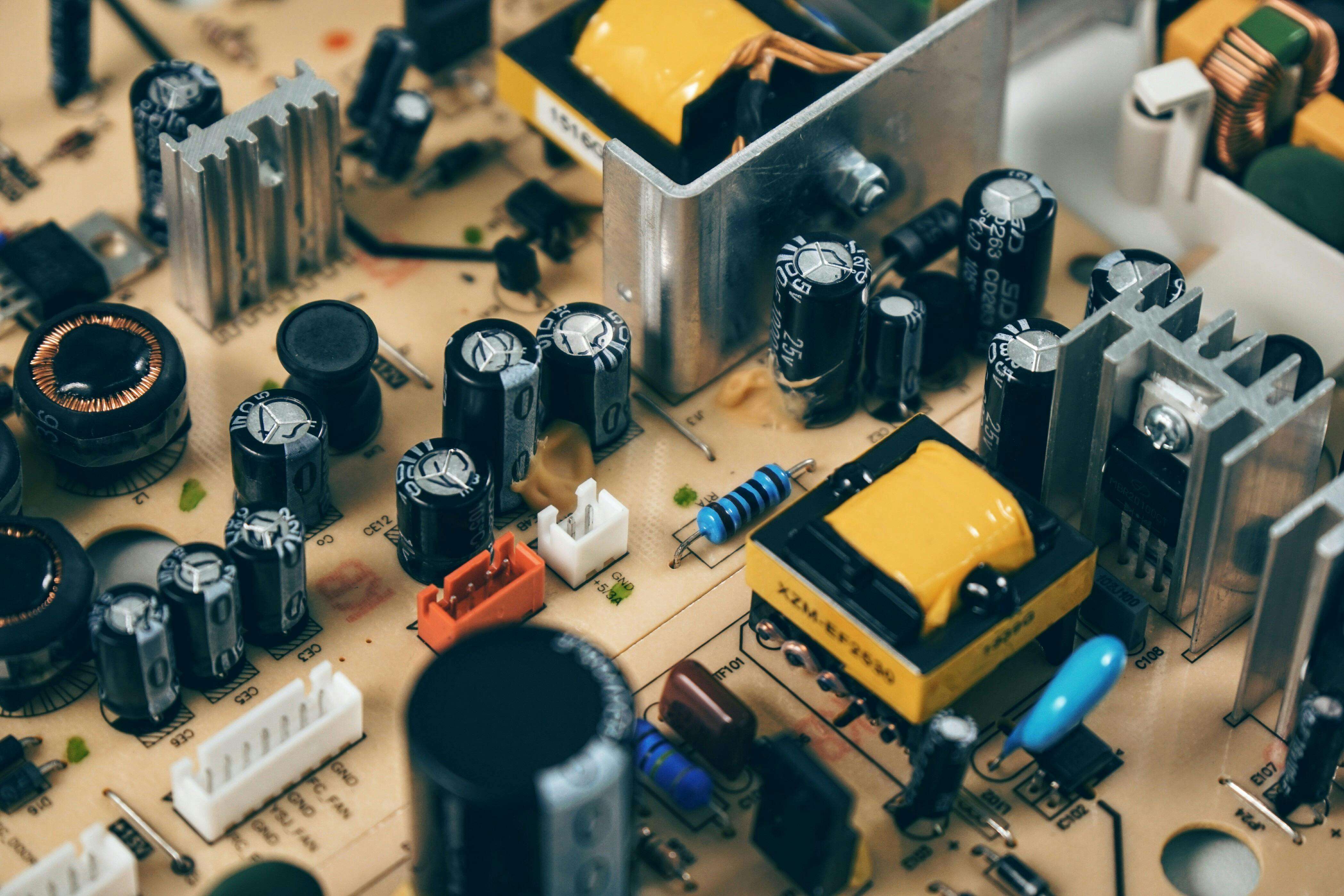
In the electronics industry of Japan and South Korea, precision components are the "key pieces" that ensure the reliability of products. From small connectors in smartphones to circuit supports in tablets, and from core components of automotive electronic systems to large-scale ones, these parts have extremely strict requirements for "tolerance" - typically, deviations must be controlled to the micrometer level (within 0.01 millimeters), otherwise, minor issues can lead to assembly jams, while severe cases can result in equipment malfunction, increasing production rework costs. For European and American companies aiming to optimize their supply chains, understanding this high-tolerance processing logic in Japan and South Korea is extremely important. After all, their decades of manufacturing experience can provide many "guidelines for avoiding pitfalls" for the global supply chain.
I. The core solution for high tolerance: How CNC machining "masters the stage precisely"?
When it comes to the "must-have skills" for meeting high-tolerance requirements, CNC (Computer Numerical Control) machining is undoubtedly the key. Compared to traditional manual processing, CNC machines precisely control the movement of the cutting tools through computer programs, completely eliminating the uncertainty of manual operations. For example, when machining the shell of a camera module, several precise holes need to be opened on the curved surface to accommodate the lens and sensor - even a deviation of 0.01 millimeters in the hole positions can lead to blurry imaging or signal interference. At this time, CNC milling (removing material by rotating the tool) comes into play: it can precisely cut out planes, slots, and even complex curved surfaces along the design path, ensuring that the dimensions of each part are "exactly fitting" with the drawings, and assembly is almost not adjusted.
The multi-axis CNC machines commonly used in Japanese and South Korean factories are even more powerful - for example, 5-axis machines can process simultaneously from multiple angles, not only doubling efficiency but also maintaining consistency. For instance, the camera shells produced by a certain South Korean electronics factory, after being processed by 5-axis CNC milling, the hole positions can be stabilized at ±0.005 millimeters, fully meeting the requirements of high-end mobile phones.
II. CNC turning: The "precision guardian" for rotating parts
In addition to milling, CNC turning (a processing method for symmetrically rotating parts) is also the "left arm and right arm" of high-tolerance processing. For example, when producing bearing sleeves and precision threaded shafts in mobile phones, it is necessary to ensure the "coincidence" (the degree of alignment of the center) and surface finish of the parts - even a large deviation in coincidence can cause the rotation to be stuck, affecting the touch sensitivity of the phone.
The approach of Japanese and South Korean factories is to combine CNC turning with an automated inspection system: while the machine is processing, the inspection equipment measures the dimensions in real time. Once a deviation is detected, the program will immediately adjust the tool path. For example, the phone hinge produced by a certain Japanese factory, after being processed by CNC turning, the coincidence can be controlled at ±0.003 millimeters, and the scrap rate per batch is less than 0.1%. Imagine that dozens of CNC turning machines in the workshop operate 24 hours a day, producing thousands of qualified parts per hour. This is all thanks to this "processing-inspection" closed loop, making the supply chain as stable as a "hardworking ox".
III. The "hidden code" behind high tolerance: Materials, processes, and environment
In fact, having good machines is not enough; material selection and process optimization are the "inner strength". The aluminum alloy and engineering plastics most commonly used by Japanese and South Korean electronics factories are "tailor-made" for precision processing - aluminum alloy is lightweight, easy to cut, and has good thermal stability, making it less likely to deform during processing; engineering plastics (such as PC + ABS) are suitable for some complex-structured parts, such as the frame of mobile phones, which can ensure strength while meeting high-precision requirements.
The "simulation test" before processing is also crucial. For example, when processing mobile phone brackets in a certain South Korean factory, they will first use simulation software to simulate the tool path, adjusting parameters such as cutting speed and feed rate - if the cutting speed is too fast, it will cause the material to heat up and deform; if too slow, it will reduce efficiency. Through simulation, the "optimal solution" can be found to avoid problems during processing.
There are also environmental factors. High tolerance processing is particularly sensitive to temperature and humidity. For example, a certain precision parts factory in Japan maintains a constant temperature and humidity environment of 22℃ ± 1℃ and 50% ± 5% throughout the year, in order to reduce the thermal expansion of machines and materials - if the temperature fluctuates, the guide rails of the machine tools will deform, and the dimensions of the processed parts will deviate.
IV. "Advice for Learning from Japanese and Korean Experiences" for Western Enterprises:
For Western enterprises, when cooperating with Japanese and Korean suppliers, they may focus on the following points:
• Equipment capability: Ask clearly what type of CNC machine tools the factory uses and whether there is an automated detection system;
• Process details: For example, has the selection of materials been tested through simulation, and have the processing parameters been optimized;
• Quality control: Is there a "full-process traceability" system? For instance, each part has a unique QR code that can be used to trace the processing time, machine number, and even detection data.
For instance, when an American technology company collaborates with a Japanese supplier, it requires the latter to provide "processing parameter reports" and "test data curves". Through these data, the former can quickly assess the stability of the supplier's process and avoid quality issues in the later stages.
Overall, the high tolerance processing in the electronics industry of Japan and South Korea relies on a combination of "machinery + process + management". From CNC milling to turning, from material selection to environmental control, every step embodies the attitude of "detail first". For European and American companies, integrating these experiences into their supply chains can not only enhance product competitiveness, but also enable global consumers to use more reliable electronic devices - after all, even the most advanced design cannot become a reality without precise parts support.
In the end, precision processing is not "black technology", but rather the persistence of "doing simple things to the extreme". Just like those CNC machines that have been running in Japanese and South Korean factories for over a decade, although they may seem ordinary, every cut contains "craftsmanship".